
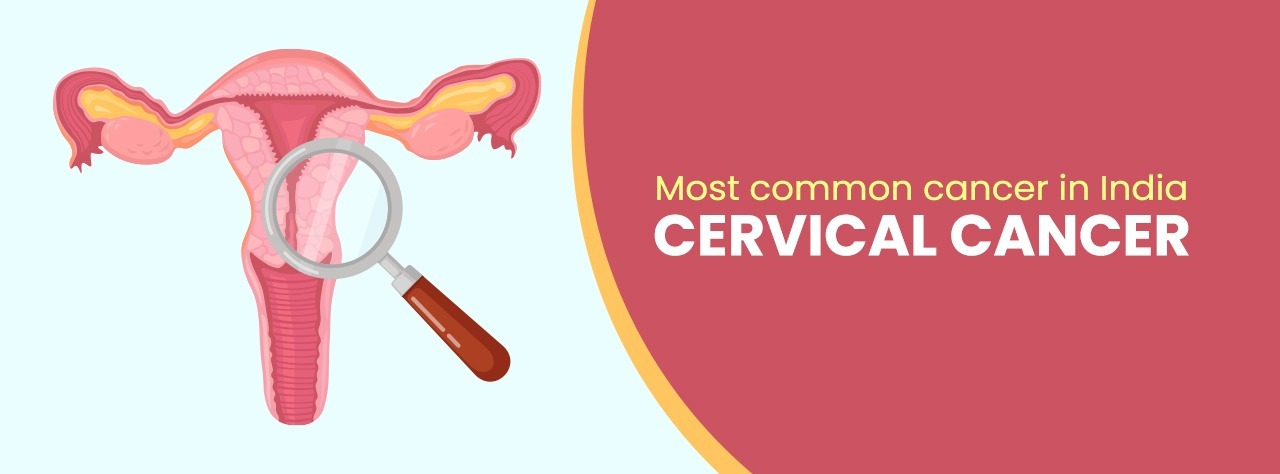
Cervical Cancer is the second most common cancer in India. Every year, approximately 1,23,000 new cases of cervical cancer are diagnosed and 77,000 women die from this disease in India, which is the highest in the world. The maximum number of cases occur in rural areas, and the majority of the cases are present in an advanced stage.
The main reasons for such high incidence and mortality are lack of effective screening programs and access to appropriate treatment.
We have very effective and inexpensive screening tools like PAP smear, HPV testing, colposcopy, VIA and VILI, which have reduced cervical cancer incidence in all developed nations. These tests can help in detecting cervical cancer in the pre-cancerous stage, and when treated timely, can prevent cancer formation.
Very often, patients have no symptoms and problem is detected during routine screening.
Or they may have symptoms like abnormal and persistent vaginal discharge, abnormal vaginal bleeding like post-coital bleeding, post menstrual or intermenstrual bleeding or postmenopausal bleeding. If timely diagnosed and treated even in the pre-cancer phase, a complete cure is assured.
At Action Cancer hospital, special emphasis is laid on cervical cancer prevention and treatment. We have all the diagnostic and screening tools like PAP smear, Liquid-based cytology(an advanced technique for cervical cytology), Human Papillomavirus testing, both DNA and mRNA testing( to detect the presence of HPV as well as the severity of infection can be tested). A colposcopy test is available to detect pre-cancer lesions and to treat them.
By this method, we see the cervix in bright light and magnification to identify the most affected site of the cervix, which can be biopsied and treated. Procedures like Cryo-therapy and Conization/ LEEP are done routinely to treat these pre-cancer lesions. These procedures are done on an OPD basis where the affected part of the cervix is frozen or removed. This prevents major surgery and the patient can preserve her uterus. By these screening techniques and minor procedures, cervical cancer can be easily detected in a pre-cancer stage.
A 32-year-old lady had come to us in 2018, with complaints of persistent vaginal discharge and post-coital bleeding. She had a large cervical erosion for which she was advised hysterectomy by gynaecologists. We examined the patient, did a PAP smear, HPV testing and colposcopy directed biopsy of the cervix. She was diagnosed to have cervical intraepithelial neoplasia I (CIN I) with a high-risk HPV infection. After the antibiotics course, Cryotherapy was done to cure her erosion.
The patient was kept under observation and repeated PAP smears and HPV testing were done. She is now symptom-free and her PAP smears and HPV testing are normal.
– Dr. Shruti Bhatia
Sr. Consultant, Gynae Oncology